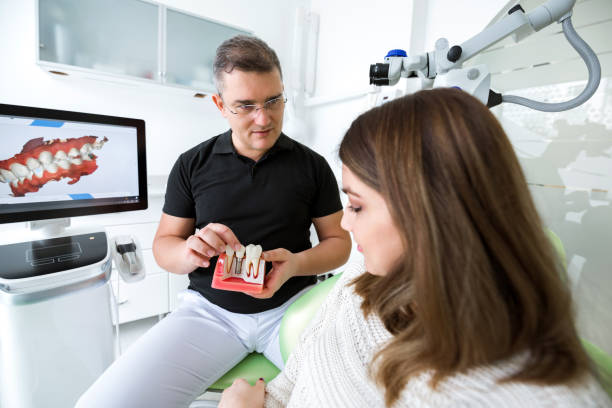
Dental implants are fake tooth roots that hold replacement teeth in your mouth forever. They look, feel, and work just like real teeth. Learning how to care for dental implants in North Edmonton is really important because they can stay healthy for 20, 30, or even your whole life if you take care of them right. The good news is that caring for them is simple—you just need to do a few easy things every day. A dentist near you can show you exactly how to keep your implants healthy and strong for many years.
What Are Dental Implants?
Dental implants have three parts working together. The first part is a small metal screw that sits in your jawbone. This screw acts like a fake tooth root. The second part is a tiny connector piece that holds everything together. The third part is the fake tooth you see and use for eating. All three pieces work as a team to create a tooth that feels just like a real one.
Here’s the important thing: dental implants near you don’t get cavities like natural teeth do. The fake tooth is made of ceramic, not tooth material. But implants can still have problems if you don’t take care of them. The bone around your implant can get sick. This is why how to care for dental implants long term really matters.
Once your implants heal and feel normal, they become part of your mouth. Most people forget they even have implants after a while. A dentist in North Edmonton can explain how implants work and what makes them different from your natural teeth.
Your Daily Care Routine for Dental Implants
Brush your implant twice every day, just like you brush your natural teeth. Use a soft toothbrush—not a hard one. Use gentle, circular motions. Don’t scrub hard or use rough back-and-forth movements.
Spend time brushing where your implant meets your gum. This spot is really important. This is where food gets stuck and where problems can start. Be extra gentle in this area.
Brush in the morning and before bed. Spend at least two minutes each time. Use toothpaste made for sensitive teeth. Ask your dentist which toothpaste is best for your implants.
Flossing Is Super Important
Use dental floss daily. Indeed, every day. You can certainly do this among the most important things. When you floss, it prevents food from getting stuck on your implant and prevents bacteria.
Use regular floss or special floss made for implants. Slide the floss slowly between your teeth and your implant. Move it gently up and down along where your gum meets the implant. Don’t snap it down hard or jerk it around.
If regular floss is hard for you, try a water flosser. It’s a small machine that shoots water between your teeth. Many older people find water flossers easier to use than regular floss.
Other Tools That Help Keep Implants Clean
- Small interdental brushes look like tiny Christmas trees. They fit between your teeth and around your implant. These brushes reach places your regular toothbrush can’t reach.
- Oral irrigators spray water around your teeth and implant. They wash away food and bacteria. Use them gently—don’t spray too hard.
- Mouthwash helps but doesn’t replace brushing and flossing. Use mouthwash without alcohol. Alcohol can hurt your gums. Rinse once or twice a day for 30 seconds.
Things That Can Break Your Implants
Don’t use your teeth to open things. Don’t open packages, bottles, or bags with your mouth. Don’t tear tape or rip things with your teeth. Use your hands or tools instead. This protects your implant from cracking.
Don’t chew hard things. Ice, hard candy, nuts still in their shells, and popcorn can damage your implant. Don’t bite your fingernails either. Be careful about what you chew.
If you smoke, quitting helps your implants stay healthy. Smoking makes implants weak and more likely to fail. It slows down healing too.
If you grind your teeth at night, tell your dentist. Grinding stresses your implants and can crack them. Your dentist can make you a special night guard to wear while you sleep.
How to Make Dental Implants Last Longer
Visit your dentist in North Edmonton twice a year. Regular checkups catch problems before they get big. Your dentist can see things you can’t see yourself.
Keep your gums healthy. Gum disease is the biggest reason implants fail. If your gums get sick, your implant fails too. Brush, floss, and see your dentist regularly to keep your gums strong.
Watch what you eat. Don’t eat very hard or very sticky foods. Be careful with really hot or cold foods. After your implant heals completely, you can eat almost anything but still be smart about it.
Take care of your health. If you have diabetes or other health problems, tell your dentist. Health problems can affect how well your implants work.
Why Professional Cleanings Matter
Make sure to have your implant examined regularly by your dentist. They take X-rays to determine the condition of the bone below. They can detect early issues such as infection or bone loss before it gets serious.
Some dentists have special training in implant care. If your dentist has experience with implants, that’s a good thing. They know what to look for.
Your Implants Can Last Your Whole Life
Many people have implants that work perfectly for 20, 30, or even 40 years. The difference between implants that last and implants that fail is care. People who brush, floss, see their dentist regularly, and don’t damage their implants have healthy implants for life.
Your implant is an investment in your smile and your health. Taking care of it protects that investment. After a few weeks, the daily routine becomes automatic. You won’t even think about it anymore.
Your Implants Deserve Love and Attention
If you have questions about your implants, notice something that doesn’t feel right, or want to learn more about keeping your smile in perfect condition, Beverly Heights Dental is here to help. Our team understands that implant care matters and is willing to do whatever it takes to ensure that your implants stay healthy and strong. We explain everything clearly in simple words and answer all your queries. We are listening to your concerns and treating you with respect and kindness. We’re here to help with everything from routine check-ups and concerns to whether implants are the right course of action for you. We always want you to feel comfortable and confident in your dental smile and health, and that’s why our practice offers you a variety of options!
Questions People Ask About Taking Care of Implants
Can you get cavities in your implant tooth?
No, the fake tooth is made of ceramic, not tooth material, so cavities can’t form in it.
Is it normal for your gums to bleed a little when you first start flossing around an implant?
A tiny bit of bleeding is normal at first, but if it keeps bleeding after a few days, tell your dentist.
What kind of toothbrush is safest to use on implants?
Use a soft toothbrush—either electric or manual—and avoid hard or medium bristles that can scratch your implant.
How long does an implant tooth last before you need to replace it?
With good care, your implant tooth lasts 10 to 15 years, and many last even longer before needing replacement.
