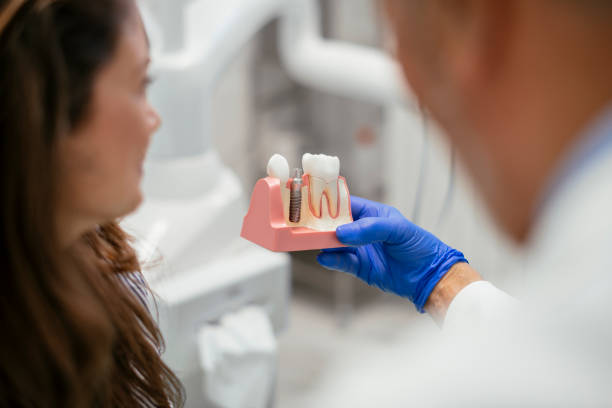
Your dental implants can last for many years, sometimes even your whole life, if you look after them properly. Think of them like a plant in your garden—with good care, they thrive. If you want a dentist in North Edmonton who can help you keep your implants healthy, learning these simple steps is the best place to start.
Taking care of dental implants in North Edmonton is not hard at all. You already know how to brush and floss your regular teeth, right? Your implants need almost the same care. In this article, we’ll show you how to care for dental implants long-term.
Why Taking Care of Your Implants Matters
Every single day, your mouth is working hard. You eat breakfast, lunch, and dinner. You talk to people. You laugh and smile. Your implants are doing all this work with you. This is why a daily care routine for dental implants is so important.
Think about a bridge that cars drive on every day. If the people who run the bridge don’t fix small cracks right away, the whole bridge can fall apart. Your dental implants near you work the same way. Small care today means zero big problems tomorrow.
What Are Implants Made Of?
Your implants are not like your natural teeth. They’re made from special materials that don’t get holes or cavities. That’s actually really cool! But here’s the thing—even though they can’t get cavities, the bone and gum around them still need protection.
Your real teeth have roots that are alive and can feel pain. Your implants have a fake root made of titanium metal. This fake root sits inside your bone. The gum around this area is where problems can start if you don’t keep it clean. So, how to make dental implants last longer starts with protecting this area.
Brushing Your Implants the Right Way
The Best Brushing Method
Brush your implants two times every day, just like you brush your regular teeth. Use a soft toothbrush—either a regular one or an electric one. Both work great! The soft bristles are gentle on your gums.
When you brush, angle your toothbrush at 45 degrees where your implant meets your gum. This is the most important spot to clean because food and bacteria like to hide there. Spend at least two minutes brushing. Make slow, gentle circles instead of hard scrubbing.
Don’t rush through this! Many people miss the back of their implants. Check in the mirror to make sure you’re cleaning all around your implant, not just the front.
Why Flossing Is Not Optional
Floss around your implants every single day. You have three choices:
- Regular floss (the thin string)
- Special implant floss (it’s thicker)
- A water flosser (uses a spray of water)
All three work well. Pick whichever one feels easiest for you. The goal is simple: get rid of food and bacteria stuck between your implant and your other teeth.
If regular floss feels hard on your hands, a water flosser might be perfect for you. It’s easier to use and still cleans really well. There’s no shame in finding what works best for you.
What You Eat and Drink Matters
Foods That Are Safe for Your Implants
Your implants are strong, but they’re not unbreakable. You need to be smart about what you chew.
Safe foods include:
- Carrots and broccoli that are soft-cooked.
- Bananas, berries, and other soft fruits
- Fish and eggs.
- Probiotics-rich dairy products.
- Noodles and pasta
- Soup and stews
Foods to avoid or eat carefully:
- Ice (very hard and can crack things)
- Hard candy or lollipops
- Nuts and popcorn
- Sticky candy like taffy or caramel
- Hard, crusty bread
- Tough, chewy meat
- Chewing on pens, ice, or your fingernails
The rule is simple: if it’s hard to bite through with your fingernail, don’t bite it with your teeth.
| Food Type | Best Choices | What to Skip |
| Proteins | Soft fish, chicken, tofu, eggs | Tough meat, hard nuts |
| Fruits | Bananas, berries, watermelon | Hard apples, whole carrots |
| Vegetables | Cooked squash, beans, peas | Raw hard carrots, corn on the cob |
| Treats | Pudding, ice cream, soft cake | Hard candy, caramel, sticky gum |
Smoking and Your Implants
Here’s something really important: smoking is bad for your implants.
When you smoke, the tobacco slows down how fast your body heals. Your gums don’t get enough blood flow, which makes them weaker. Weak gums mean your implants are in trouble.
Stopping smoking before your surgery helps a lot if you smoke now and are planning on getting implants. If you already have implants and you smoke, every cigarette you don’t smoke helps your implants stay healthy.
Going to the Dentist Regularly
You should visit your dentist at least two times per year. But here’s a better idea: if you have implants, go three or four times per year instead.
Why? Your dentist uses special tools to clean your implants in ways you can’t do at home. These visits are like getting your car serviced—everything gets checked, cleaned, and adjusted.
During these visits, your dentist looks for small problems before they become big ones. They check if your implant feels loose. They look at the colour and shape of your gums. They clean below the gum line where your toothbrush can’t reach.
Seeing a dentist near you regularly is one of the smartest things you can do for your implants. It’s like having a bodyguard for your smile.
Signs That Something Might Be Wrong
Learn what to look for. These signs mean you should call your dentist right away:
- Swelling or redness around your implant
- Tenderness or pain when you chew
- Bleeding that doesn’t stop after a few days of flossing
- Feeling loose, like the implant is moving
- Pus or discharge from around the implant
- Difficulty chewing or an odd bite
Some light bleeding when you start flossing is normal at first. But if it keeps happening after a week, that’s not normal.
Never ignore these signs. Small problems are easy to fix. Big problems are hard and expensive to fix. Call your dentist right away if something feels wrong.
The Daily Routine That Works
Here’s your plan:
Morning:
- Use a soft toothbrush to brush twice daily.
- Make sure to floss or use a water flosser.
- Wash with water.
Evening:
- Brush for two minutes with a soft toothbrush
- Use floss or a water flosser
- Rinse with water
Three to Four Times Per Year:
- Visit your dentist for a professional cleaning and check-up
That’s it! This simple routine keeps your implants healthy for years and years.
Your Implants Are an Investment
Think about why you got implants in the first place. You wanted to eat better. You wanted to smile without worrying. You wanted to feel confident again.
Your implants gave you all of that. Now it’s time to protect your investment. The good news is that protecting them doesn’t take much time or effort. Just fifteen minutes a day of care pays off for decades.
Every time you floss, you invest in your future smile. Opting not to chew hard candy each time is choosing health. When you pay for a toothbrush, you are investing in yourself.
Your Smile Deserves the Best Care
Taking care of your implants is completely doable. Brush gently, floss daily, eat smart, and see your dentist regularly. These four things are all you need to keep your implants healthy and strong for many years to come.
The work you put in today protects your smile tomorrow. You’re not just maintaining teeth—you’re keeping your confidence, your comfort, and your quality of life. That’s worth a few minutes each day.
We’re Here to Help You Succeed
At Beverly Heights Dental, we understand that your implants are important to you. Our team cares about helping you keep your smile healthy and beautiful. We take time to explain things clearly and answer all your questions.
We do not merely fix problems; we also ensure that they do not occur. Our friendly team will help you, whether your implants are brand new or you’ve had them for years. Every patient deserves a dentist who is not only a good listener but also explains things in an easy-to-digest way and genuinely cares for their success.
Questions People Ask Us All the Time
Q: Will my implant develop a cavity in the future?
No, implants cannot get cavities, as they are not made of real tooth. Yet the surrounding gum and bone can become infected, so cleaning is still very important.
Q: How long will my implant really last?
With good care, many implants last 20, 30, or even 40 years. Some people keep the same implant their whole life!
Q: Is it okay if my implant feels different from my real tooth?
Yes, it’s totally normal! Implants don’t have the same nerves as real teeth, so they feel different when you chew. But they should never feel loose or hurt.
Q: Can I use regular toothpaste on my implants?
Yes, any regular toothpaste is fine. Just don’t use super harsh whitening pastes because they can scratch the implant surface.
